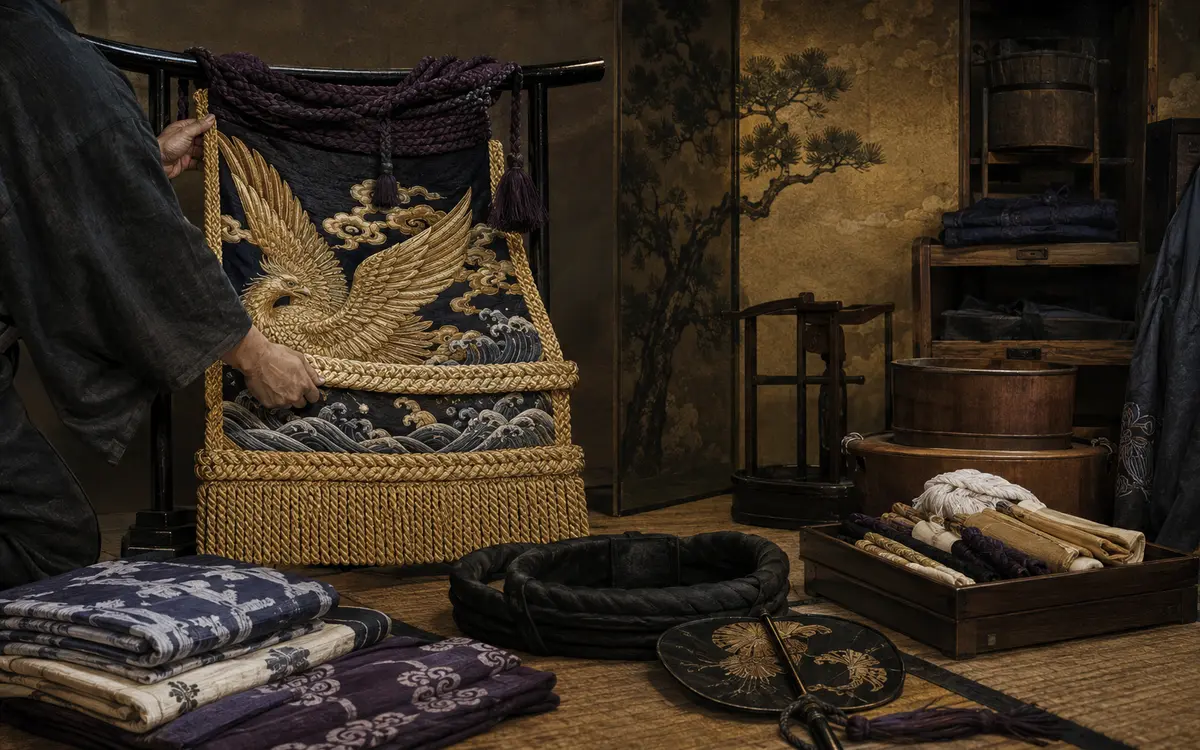
Sumo clothing and equipment communicate whether a scene represents competition, ceremony, daily life or a fictional interpretation. A mawashi and a kesho-mawashi are not interchangeable versions of the same costume, and traditional-looking props do not automatically make a production accurate. Producers should first define the context, then ask knowledgeable performers or advisers which items belong there. Ownership, fitting, privacy, cleaning, transport and permission to alter or brand an item also need to be agreed before the event or shoot.
A performance mawashi is sporting equipment
The belt worn for wrestling must be wrapped correctly and securely by someone who knows the process. It requires time, private changing space and a clear plan for who handles it before and after use. Colour and appearance may be relevant to a production, but visual preferences cannot override fit and performer approval. A costume department should not cut, pin, glue or decorate a real performance mawashi without explicit agreement.
Kesho-mawashi belongs to ceremonial presentation
A kesho-mawashi is the richly decorated apron associated with ceremonial ring entrance, not the garment used for a bout. Its design and provenance may carry personal, sponsor or organisational significance. Confirm ownership, handling, insurance and permission before using one in a photograph or production. A reproduction should be described as such rather than allowed to imply an official history it does not have.
Off-ring clothing sets a different context
Yukata, kimono and other traditional garments can place a performer in an arrival, interview, hospitality or portrait setting rather than a bout. The appropriate garment, season, footwear and dressing method depend on the intended scene and the performer’s available wardrobe. Avoid mixing items only because they look Japanese to an overseas audience. Allow time for dressing and movement tests, especially when stairs, outdoor locations or long standing periods are involved.
Match gyōji attire to the role being portrayed
In professional sumo, a gyōji’s attire and gunbai belong to a specialised official role with its own hierarchy and traditions. An entertainment portrayal should not be presented as an official Japan Sumo Association uniform or credential unless that is factually true. Review the hat, robe, fan, footwear and movement together rather than sourcing isolated decorative pieces. Any branding or visual alteration requires approval from the owner and performer.
Label authentic, replica and stylised items honestly
Authentic can describe correct cultural use, actual sporting equipment, verified provenance or a combination of these, so the production should say what it means. A safe replica may be appropriate for a fictional shoot, while real equipment may be necessary for a bout. A stylised item can be a deliberate creative choice if it is not misrepresented. Publicity copy should not invent tournament use, rank association or official approval.
Plan fittings, coverage and changing-room access
Share the wardrobe brief with the performer before the fitting, including any body exposure, close-up photography or quick changes. Provide a private, warm and secure changing area with access limited to necessary approved staff. Discuss base layers or coverage requirements early, because they may affect both appearance and movement. Consent to one wardrobe setup does not imply consent to an unplanned alternative on the day.
Manage care, continuity and transport
Record who packs, carries, cleans, dries, repairs and stores each item. Continuity photographs should be secure and limited to the production purpose, particularly when they show dressing details. International transport may involve baggage, customs or temporary-import rules that vary by destination and material. Check current official requirements or use a qualified freight professional rather than assuming ordinary luggage treatment.
PROJECT CHECKLIST
Wardrobe and prop checklist
- Define the scene as competition, ceremony, daily life or fiction
- Identify each item as sporting equipment, owned original, replica or stylised prop
- Confirm owner, handler, value, permitted use and alteration limits
- Schedule knowledgeable fitting and private changing time
- Approve exposure, base layers, close-ups and continuity photography
- Test movement, flooring, footwear and quick changes
- Assign cleaning, drying, storage, repair and return responsibility
- Check baggage, customs and insurance requirements for the actual journey
FREQUENTLY ASKED QUESTIONS
Questions producers ask us
Can a wrestler compete in a kesho-mawashi?
No. A kesho-mawashi is used for ceremonial presentation; the performance mawashi is the functional equipment worn for wrestling.
Can wardrobe make a mawashi on set?
A stylised costume may be fabricated for a fictional purpose, but it should not be treated as real wrestling equipment without knowledgeable fitting, performer approval and a safety review.
May a sponsor logo be added to traditional items?
Only after the item, context, ownership and rights are reviewed and the performer and relevant owner approve. Existing items should never be altered by assumption.
Booking enquiry
Contact Sumo Man
Tell us about your project.