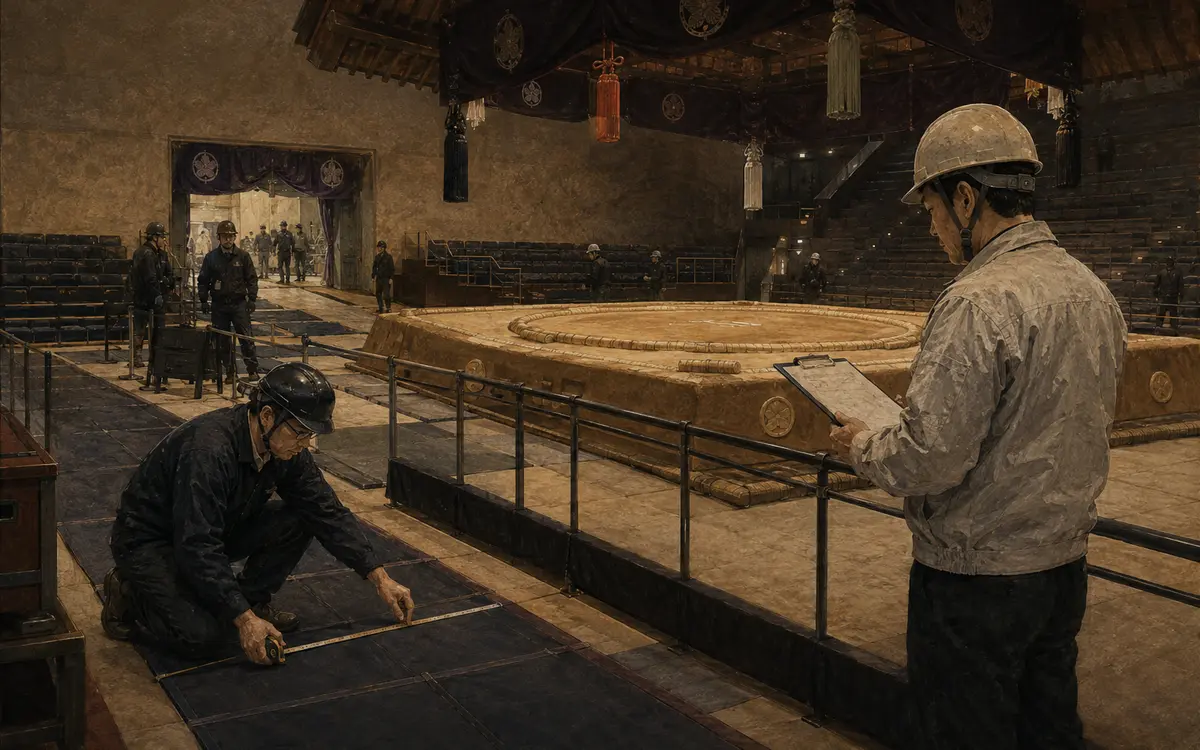
A sumo event involves large moving performers, close physical contact and audiences who may be unfamiliar with the space needed around a bout. Safety cannot be reduced to a generic waiver or a single checklist completed on show day. The producer, venue, contractors and performers need a project-specific risk assessment, clear responsibilities and authority to pause activity when conditions change. Local law, venue rules, insurance and medical requirements vary, so official guidance and qualified professional advice are required where applicable.
Assign responsibility before production begins
Name the person responsible for venue safety, performance coordination, participant management, first aid and emergency communication. Share the proposed actions with performers early enough for them to identify practical concerns. Record who can approve or reject changes to the ring, floor, schedule or guest activity. A risk assessment should be reviewed after site visits, rehearsals and significant programme changes.
Inspect the surface and any raised structure
The performance surface should be stable, appropriate for the agreed movements and free of loose coverings, moisture, sharp edges and unexpected level changes. Raised stages or portable rings require design and approval by suitably qualified people and the venue. Floor protection must not create a slipping or trip hazard of its own. Inspect again after cleaning, scenery changes or audience access.
Control the full movement and fall zone
Keep spectators, camera operators, cables, loudspeakers, tables and hard scenic items outside the agreed clear area. Barriers and stewards should prevent people from leaning or stepping into the performers’ path. Plan safe entry and exit routes that do not cross audience queues. The required zone depends on the actual action and should not be copied from another venue without review.
Provide suitable backstage and recovery conditions
Performers need private changing space, secure storage, drinking water, appropriate meals, toilets and a route to the stage. Allow warm-up and recovery time around demanding bouts, especially after travel or in hot conditions. Vehicle, doorway, stair and lift capacity may need checking for large performers and equipment. Health-specific decisions belong with the individual and appropriately qualified professionals, not an event article.
Treat guest participation as a separate risk
Participation must be voluntary, clearly explained and supervised by people who understand the agreed activity. The producer should define selection, consent, clothing, jewellery, footwear, stopping cues and an observation-only alternative. Alcohol consumption, crowd pressure or a desire for dramatic footage can make an otherwise simple activity inappropriate. Never add a participant or increase contact at the last moment without review.
Plan safeguarding and accessibility
Events involving children must follow the host organisation’s safeguarding, consent and supervision policies and applicable local requirements. Guests with mobility, sensory or communication needs should receive clear information and a realistic alternative where the main activity is unsuitable. Avoid demanding unnecessary medical disclosures in public. Schools, guardians, venues and qualified advisers should determine any additional controls required.
Integrate the show with venue emergency procedures
Confirm how to contact on-site first aid, security and emergency services, and ensure staff know the venue address and access point. Keep emergency routes clear during the performance and photo sessions. Brief performers and visiting crew on alarms, assembly points and the person giving instructions. Insurance, first-aid provision and reporting duties should be checked against local rules and professional advice.
Agree stop conditions and record incidents
Anyone with designated safety responsibility should be able to stop the activity for a wet surface, failed barrier, crowd intrusion, equipment movement or performer concern. The schedule should contain enough margin that staff are not pressured to ignore a problem. Record near misses and incidents using the venue’s process, then decide whether the programme needs to change. Reopening should follow inspection and authorised approval.
PROJECT CHECKLIST
Pre-opening safety check
- Named safety, performance, participant and emergency leads
- Current project-specific risk assessment and approved programme
- Inspected floor, ring, stage, barriers and clear zone
- Controlled audience, camera, cable and performer routes
- Private changing, water, rest and secure storage
- Documented participation, consent and safeguarding process
- First-aid contacts, emergency access and venue briefing
- Authority and procedure to stop, inspect and report
FREQUENTLY ASKED QUESTIONS
Questions producers ask us
Does a signed waiver make audience participation safe?
No. Consent documentation does not replace suitable activity design, supervision, venue controls, risk assessment or compliance with local requirements.
Can we reuse another event’s risk assessment?
It may provide background, but the current venue, programme, performers, participants and local rules require a project-specific assessment and review.
Who decides whether a bout should stop?
The production should name authorised safety and performance leads in advance, while every performer must also be able to raise a concern and stop unsafe activity.
Booking enquiry

Contact Sumo Man
Tell us about your project.