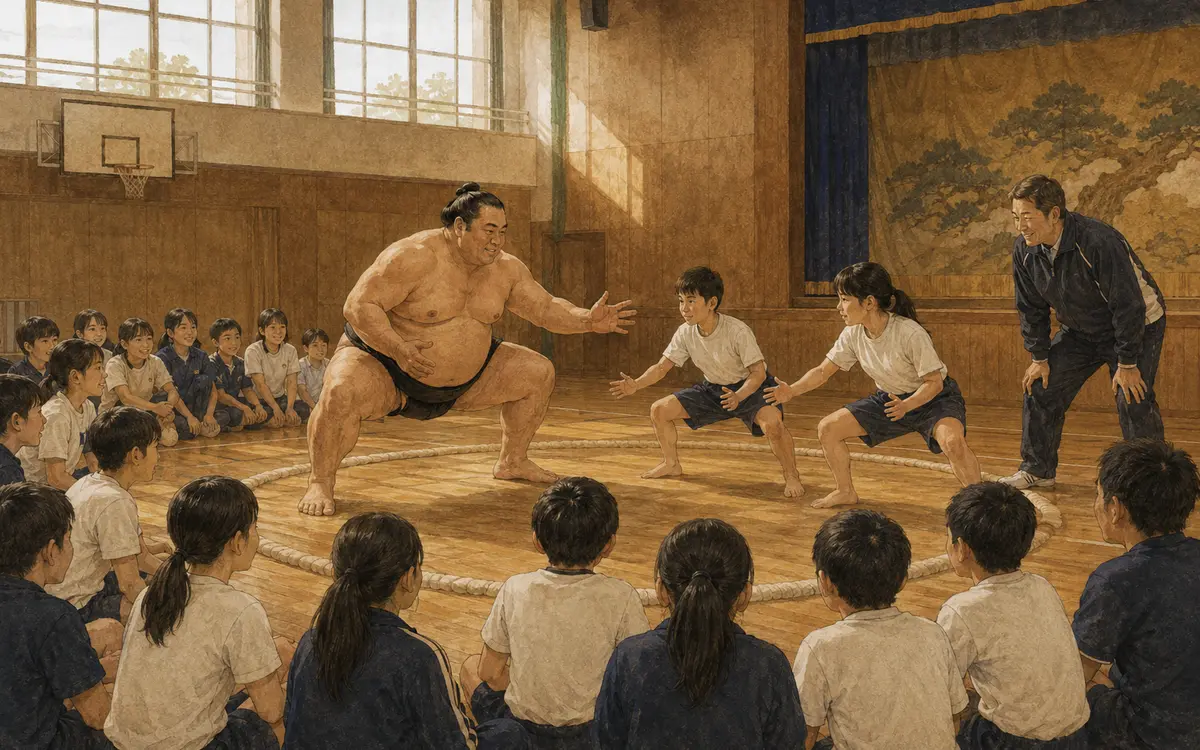
A school sumo workshop can connect movement, language, history, etiquette and contemporary working lives, but it should be designed as education rather than a shortened entertainment show. The programme needs a defined age group, learning purpose, access plan and safeguarding framework. Demonstration and optional movement can make unfamiliar ideas concrete without requiring every student to participate physically. Teachers and presenters should also avoid reducing Japan or sumo to stereotypes, and should distinguish professional sport from a visitor activity.
Agree two or three realistic learning objectives
Decide whether students should understand basic rules, recognise selected training movements, discuss etiquette, learn vocabulary or explore careers around sumo. Objectives should match age, curriculum and available time. Avoid promising broad outcomes such as improved discipline or fitness from a single visit. Teachers can help identify prior knowledge and misconceptions that the session should address.
Give enough context before the action
Introduce professional sumo as a living organised sport with training, ranks, officials and established customs. Explain a small number of Japanese terms clearly and repeat them during the demonstration. Historical details should come from reliable sources and be separated from modern practice where they differ. A map, image or simple ring diagram may be more useful than a long spoken chronology.
Demonstrate before inviting movement
A performer can show shiko, suriashi, posture and selected techniques at normal and reduced speed. Students who participate should receive a simplified task, clear boundaries and enough space. High kicks, forceful contact and competitive pressure are not necessary to understand the movement. Observation, seated imitation or vocabulary roles can keep non-participants involved.
Discuss etiquette without turning it into a slogan
Bows, waiting, listening and acknowledgement of an opponent provide opportunities to discuss how formal behaviour structures a contest. Presenters should explain what a gesture does in context rather than claiming one custom represents all Japanese culture. Students can compare sporting rituals they already know. Questions about gender, tradition and change should be handled accurately and without dismissing legitimate curiosity.
Create equivalent ways to take part
Plan for different mobility, sensory, communication and confidence needs before the visit. Participation can include movement, observation, timing, identifying terms, asking questions or helping interpret a diagram. Do not ask students to disclose private health information publicly or explain why they decline. The school and appropriately qualified staff should determine individual adjustments and any medical restrictions.
Follow the school’s safeguarding and consent process
The school should approve performer access, staff supervision, physical contact, volunteer selection, photography and use of student images. Adults delivering the programme need clear boundaries and a named school contact throughout the visit. Requirements vary by institution and jurisdiction, so current school policy and official guidance take priority. A public performance consent form should not be assumed to cover close-up or promotional media use.
Make room for questions about real lives
Students may ask about food, training, injuries, income, retirement or life outside the ring. Agree in advance which personal topics performers are comfortable discussing, and allow them to decline. Career discussion can include wrestlers, gyōji, coaches, event staff, media and post-competition paths without implying that everyone has the same experience. First-person answers should be labelled as individual experience rather than universal fact.
Match the format to the lesson and follow up
A shorter session may combine introduction, demonstration and questions, while a longer workshop can rotate small groups through movement, vocabulary and production roles. Build in transitions, interpretation and water breaks rather than filling every minute. Provide teachers with the terms and sources used so students can revisit them. A brief reflection task is more valuable than adding an unsupported certificate or claim of mastery.
PROJECT CHECKLIST
School programme checklist
- Age group, class size, learning objectives and curriculum link
- Performer credentials and an accurate description of the programme
- Room size, floor, access, changing and sound arrangements
- Optional movement plan with observation and adapted alternatives
- School-approved safeguarding, supervision and contact procedures
- Consent and usage rules for all photography or recording
- Interpretation, sensory and communication adjustments
- Teacher follow-up notes with verified terms and sources
FREQUENTLY ASKED QUESTIONS
Questions producers ask us
Does every student need to do the physical exercises?
No. Participation should be optional, with meaningful observation, vocabulary or adapted activities available to students who do not join the movement.
Can students wrestle a professional performer?
Only an approved, age-appropriate and closely supervised activity should be considered. A demonstration or non-contact exercise is often a more suitable educational choice.
May the school post workshop photographs online?
Only under the school’s consent and safeguarding policy and the agreed performer image rights. Attendance alone does not establish permission for promotional use.
Booking enquiry
Contact Sumo Man
Tell us about your project.